Health & Fitness Tool
Free BMI Calculator
Calculate your Body Mass Index (BMI) using metric (kg/cm) or imperial (lbs/ft/in) units. Screen your weight category and view your personalized healthy weight range in seconds.
Instant Results
100% Private
No Sign-Up
Metric & Imperial

System:
Your Measurements
Enter your current body weight and standing height.
kg
cm
Calculated 100% locally in your browser. No personal health data leaves your device.
Your BMI Result Will Appear Here
Enter your weight and height on the left to calculate your Body Mass Index, WHO category, and healthy weight range.
Supports Metric & Imperial
How BMI Is Calculated (Formulas & Examples)
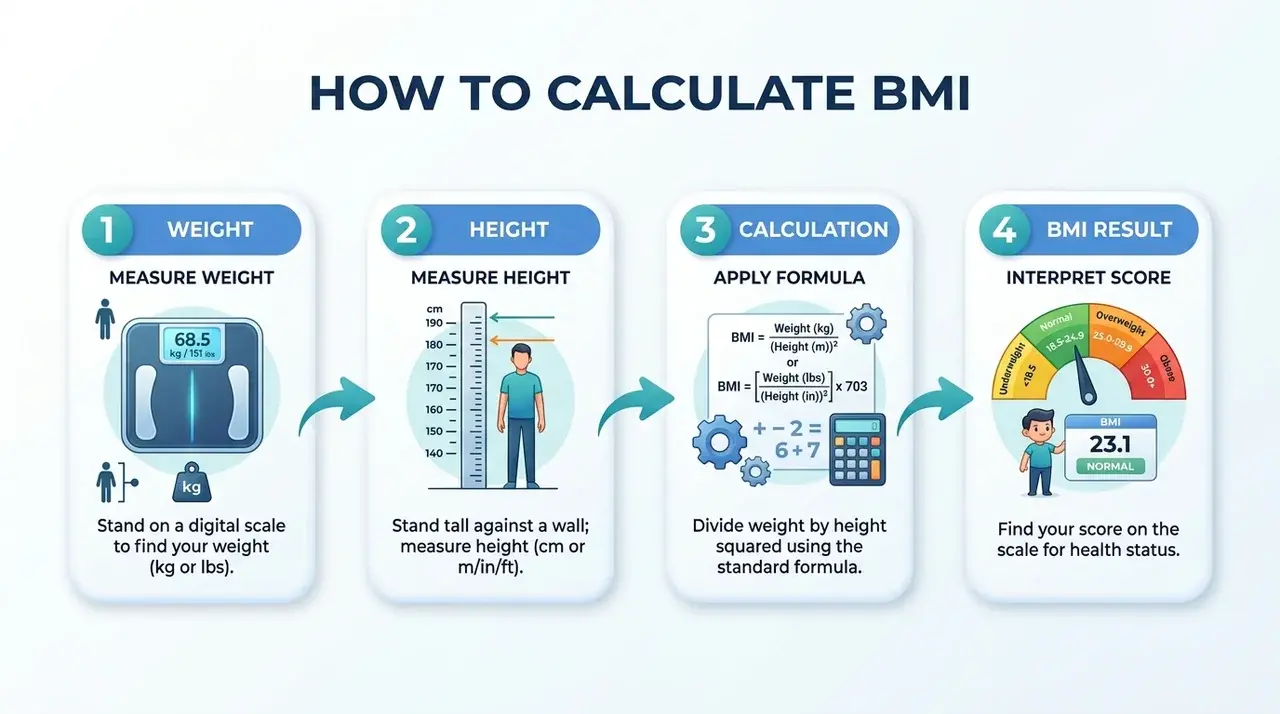
The Body Mass Index formula divides your weight by the square of your height.
Metric SystemInternational Standard
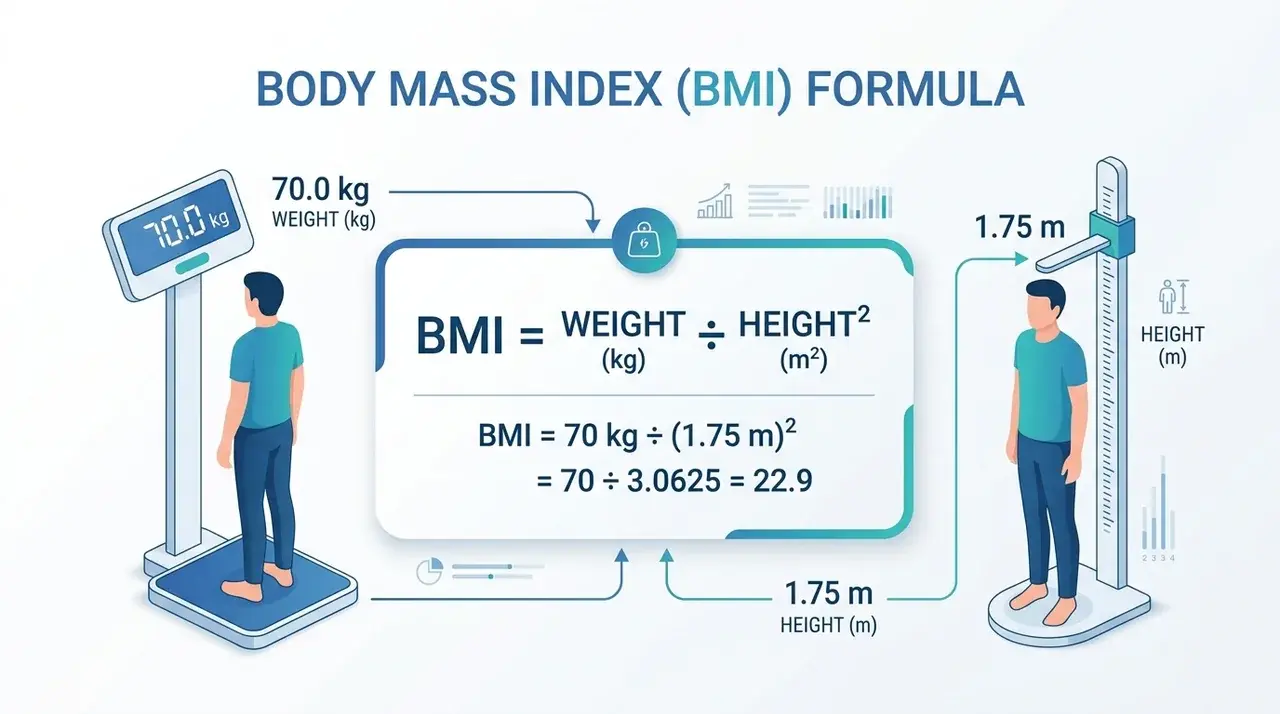
BMI = weight (kg) ÷ height² (m²)
Worked Example (70 kg, 175 cm):
- Convert height to meters: 175 cm ÷ 100 = 1.75 m
- Square the height: 1.75 × 1.75 = 3.0625 m²
- Divide weight by height²: 70 ÷ 3.0625 = 22.9 (Normal weight)
Imperial SystemUS / UK Standard
BMI = (weight (lbs) ÷ height² (in²)) × 703
Worked Example (154 lbs, 5 ft 7 in):
- Convert height to inches: (5 × 12) + 7 = 67 in
- Square the height: 67 × 67 = 4,489 in²
- Divide and multiply by 703: (154 ÷ 4489) × 703 = 24.1 (Normal weight)
Adult BMI Categories (WHO Standard)
Standard classifications defined by the World Health Organization for adults aged 20 and older.
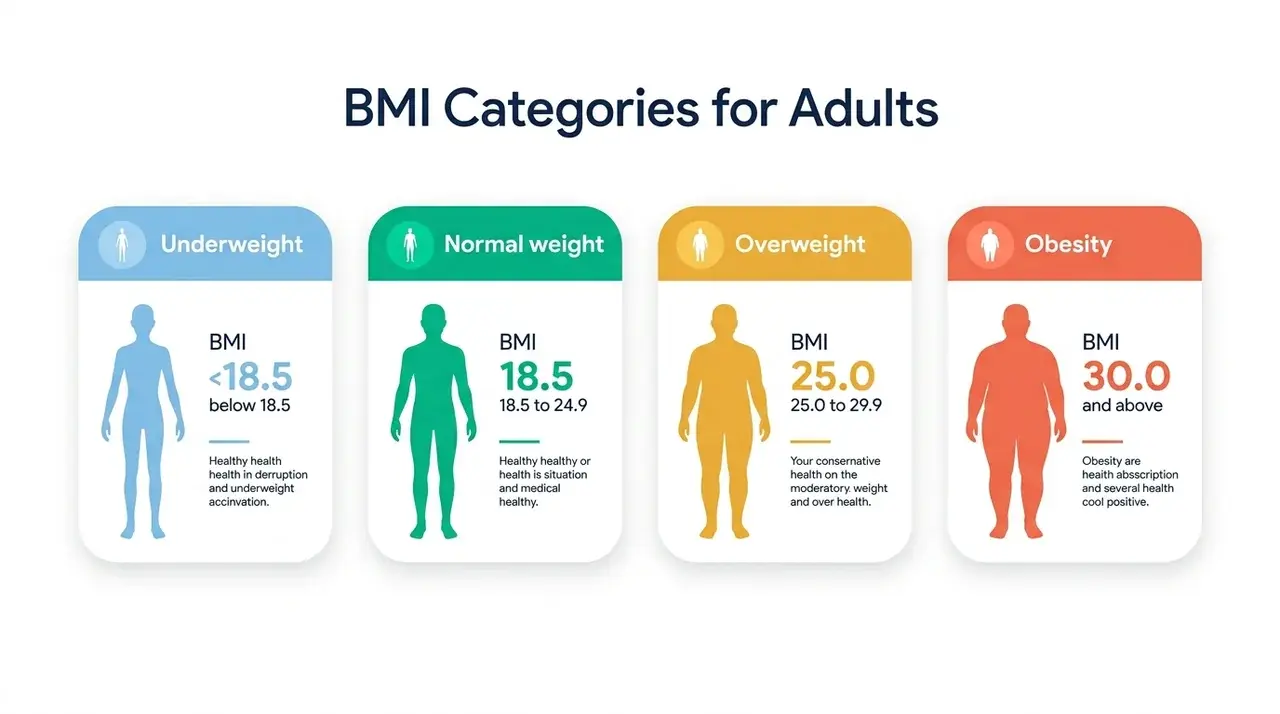
Underweight
< 18.5BMI
May indicate malnutrition, eating disorders, or underlying health conditions.
Normal weight
18.5 – 24.9BMI
Associated with lowest statistical risk for cardiovascular diseases and metabolic illness.
Overweight
25 – 29.9BMI
Elevated risk for hypertension, type 2 diabetes, and cardiovascular strain.
Obese (Class I)
30 – 34.9BMI
Moderate obesity with clinically significant health risk requiring lifestyle modification.
Obese (Class II)
35 – 39.9BMI
Severe obesity associated with heightened cardiovascular and metabolic complications.
Obese (Class III)
≥ 40BMI
Very severe or morbid obesity associated with substantial chronic disease risks.
What Is BMI?
Body Mass Index (BMI) is an anthropometric screening indicator developed in the 19th century by Belgian mathematician Adolphe Quetelet. It measures body weight relative to standing height squared, providing an accessible, standardized way for clinicians, epidemiologists, and individuals to assess whether a person falls into an expected weight bracket.
While BMI does not measure adipose tissue directly, extensive international research correlates high or low BMI values with long-term morbidity, cardiovascular events, and metabolic conditions.
BMI Calculator Using kg and cm (Metric Formula)
Many users search specifically for a BMI calculator using kg and cm because height is universally measured in centimeters across healthcare settings, while weight is recorded in kilograms.
To manually calculate your BMI using centimeters and kilograms:
BMI = weight (kg) ÷ [height (cm) ÷ 100]²
Because 1 meter equals 100 centimeters, simply shift the decimal point two places to the left (e.g. 170 cm becomes 1.7 m), square that value (1.7 × 1.7 = 2.89), and divide your weight (e.g. 68 kg ÷ 2.89 = 23.5).
Our tool completes this conversion instantly in the browser without requiring manual math or conversions.
BMI Calculator for Men and Women
A common question searchers ask is whether to use a separate BMI calculator for men or women. In standard clinical practice, the mathematical formula for adult BMI does not change based on sex—the equation remains weight ÷ height² for all adults.
However, interpretation requires nuanced clinical understanding:
- Body Fat Percentage: Biological women naturally carry a higher percentage of essential adipose fat (approximately 10–13% essential fat vs. 2–5% in men) for hormonal and reproductive balance. Consequently, a man and a woman with the identical BMI of 23.0 may have substantially different proportions of body fat and lean muscle.
- Muscle Mass Differences: Adult men typically possess higher skeletal muscle mass and bone mineral density than women of the same height. Highly athletic men may register in the “Overweight” category on a standard BMI scale despite having very low subcutaneous and visceral fat.
- Fat Distribution: Men are statistically more prone to accumulating visceral fat in the abdominal cavity (android fat distribution), which presents higher cardiovascular risks, whereas premenopausal women more commonly store subcutaneous fat in the hips and thighs (gynoid fat distribution).
BMI and Age: Children, Adults, and Older Adults
Standard BMI charts apply specifically to adults aged 20 and older. For younger individuals and seniors, different biological considerations apply:
Children & Adolescents (Ages 2–19)
Children grow at varying rates and body fat percentages shift continually with pubertal development. Therefore, pediatric health uses BMI-for-age percentiles (comparing a child against standardized growth curves by CDC/WHO) rather than fixed adult cut-offs.
Older Adults (Ages 65+)
Geriatric health research suggests that a slightly higher BMI (23 to 27 kg/m²) may offer protective survival benefits against bone fractures, sarcopenia (muscle wasting), and chronic illness.
What Does Your BMI Result Mean?
Your BMI provides a rapid, population-referenced snapshot of your weight category. However, a single calculation does not measure health in isolation. It is best used as an initial screening indicator alongside comprehensive clinical health assessments:
- Waist Circumference: Measuring waist size helps gauge visceral abdominal fat, which is closely linked to metabolic syndrome.
- Blood Biomarkers: Blood pressure, fasting glucose, lipid panels (HDL, LDL, triglycerides), and HbA1c give deeper insight into cardiometabolic health.
- Physical Fitness: Cardiorespiratory endurance, strength training, and dietary quality are powerful predictors of longevity regardless of BMI.
Healthy Weight Range by Height
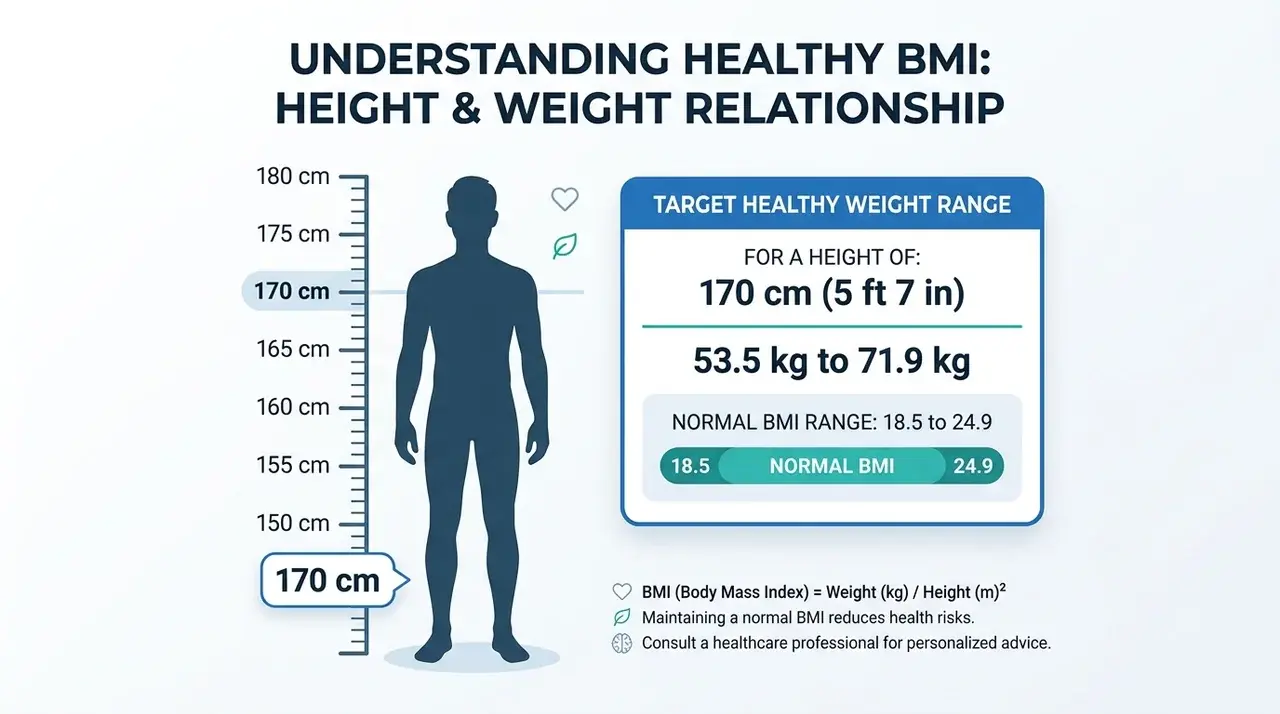
Because Body Mass Index is calculated as weight divided by height squared, the target healthy weight window (standard adult BMI 18.5 – 24.9) expands proportionally with stature. For example, for an individual standing 170 cm (5 ft 7 in) tall, the standard healthy weight span ranges from 53.5 kg to 71.9 kg.
Limitations of BMI: Why It Is a Screening Tool, Not a Diagnosis
Important Medical Context
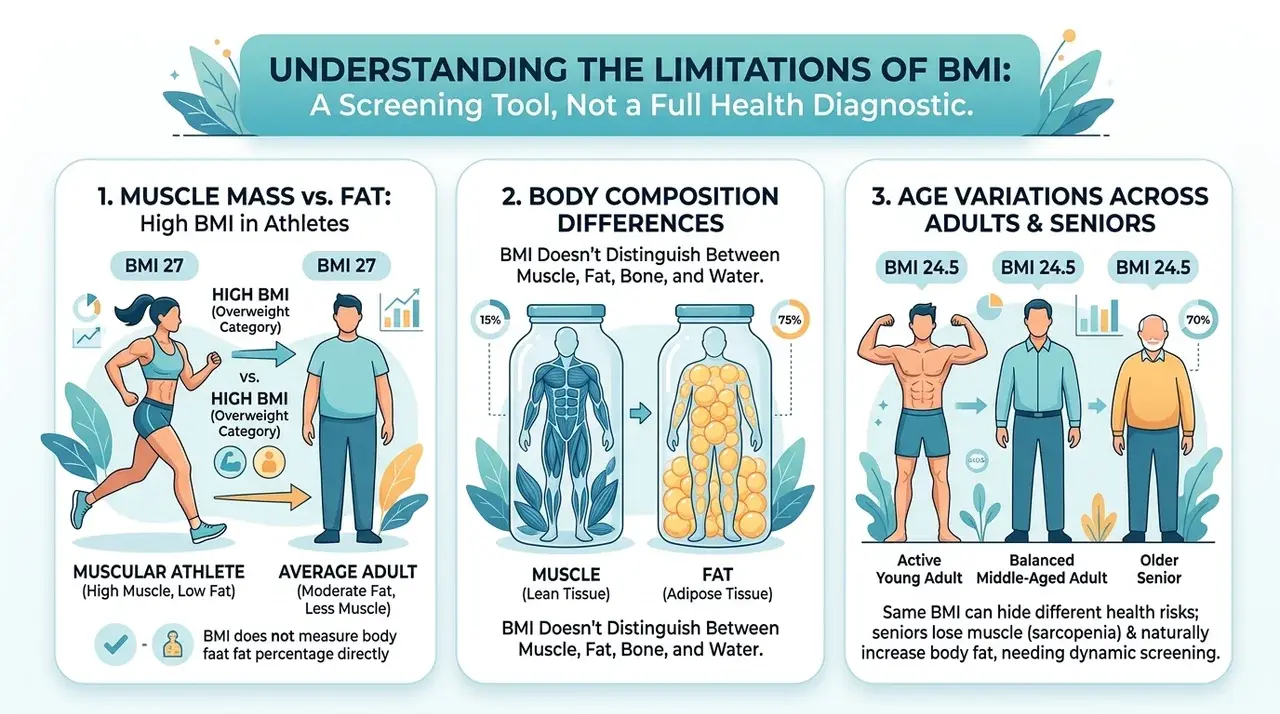
BMI cannot distinguish between adipose fat tissue, lean skeletal muscle mass, and bone density. Bodybuilders, rugby players, and strength athletes frequently test as “overweight” or “obese” due to dense muscle mass. Conversely, sedentary individuals with low muscle mass may have a “normal” BMI despite carrying unhealthy levels of body fat (often referred to as normal-weight obesity).
Furthermore, ethnicity influences metabolic risk thresholds. The World Health Organization identifies that Asian populations face increased cardiovascular and type 2 diabetes risks at lower BMI thresholds (overweight risk beginning at 23.0 kg/m² and obesity at 27.5 kg/m²).
Want a deeper dive into BMI science?
Read our in-depth educational guide on how Body Mass Index works, with historical background and research.
About BMI Calculator
Body Mass Index (BMI) is an international screening measure that evaluates weight relative to height in adults. This free online BMI calculator supports both metric (kg and cm) and imperial (lbs, ft, and in) measurements. Enter your height and weight to instantly compute your BMI value, view your World Health Organization (WHO) category, and discover your healthy weight range.
Key Features
Fast Processing
Runs instantly on your local device.
100% Secure
No files are ever stored or uploaded.
Mobile Friendly
Works perfectly on any screen size.
Highly Accurate
Delivers professional-grade output.
Cross Platform
Use it on Chrome, Safari, or Edge.
Completely Free
Unlimited usage with no hidden fees.
How It Works
Get results in seconds with our streamlined, browser-native process.
Select Your Preferred Units
Choose between Metric (kilograms and centimeters) or Imperial (pounds, feet, and inches) measurement systems.
Input Height and Weight
Type your current weight and standing height into the corresponding input fields.
Inspect Your BMI & Category
Instantly see your calculated BMI score, visual position on the WHO spectrum, and official weight classification.
Explore Your Healthy Range
Review your personalized healthy weight span (BMI 18.5 – 24.9) and learn about the metric and imperial calculation formulas.
Why Use This Tool?
Designed to save time, protect your privacy, and deliver professional-grade results every time.
Dual Unit Flexibility
Switch effortlessly between metric (kg, cm) and imperial (lbs, feet, inches) measurements, or customize units independently.
WHO Category Precision
Instant evaluation against official World Health Organization adult classifications, from underweight to obesity class III.
Height-Specific Healthy Range
Displays the exact minimum and maximum weight corresponding to the standard 18.5 – 24.9 healthy BMI range for your stature.
100% Private & Client-Side
Your personal measurements are computed entirely in your browser. Zero health data is ever transmitted, tracked, or stored.
Common Use Cases
See how different professionals leverage this tool in their daily workflows.
Personal Wellness Tracking
Monitor your baseline body metrics and track changes over time during fitness programs, dietary adjustments, or wellness routines.
Weight Management Goals
Identify your target healthy weight window based on height to set realistic, medically grounded fitness objectives.
Clinical Pre-Screening
Prepare baseline vitals and height-weight metrics before annual physical examinations or telehealth consultations.
Health Education
Understand the mathematical relationship between height and body weight across diverse demographic populations.
The Nurex Difference
Why thousands choose our platform over traditional software.
Other Tools
- Upload files to external servers
- Slow processing times
- Forced watermarks on output
- Strict file size limits
- Intrusive advertisements
Recommended
With Nurex
- 100% local browser processing
- Lightning fast execution
- Completely free & watermark-free
- Generous or unlimited file sizes
- Beautiful, ad-free premium UI
Frequently Asked Questions
Everything you need to know about this tool.
BMI (Body Mass Index) is a standardized screening metric calculated by dividing body weight by height squared. For adults aged 20 and older, healthcare providers and international organizations like the WHO use BMI to screen for weight categories—underweight, normal weight, overweight, and obesity.
In metric units, the formula is: BMI = weight (kg) ÷ height² (m²). In imperial units, the formula is: BMI = (weight (lbs) ÷ height² (in²)) × 703. For example, an adult weighing 70 kg at 1.75 m height has a BMI of 70 ÷ (1.75 × 1.75) = 22.9.
Yes. To calculate BMI using centimeters, first convert centimeters to meters by dividing by 100 (e.g., 175 cm = 1.75 m), square that value (1.75 × 1.75 = 3.0625), and then divide your weight in kilograms by that number (70 ÷ 3.0625 = 22.9). This calculator handles this conversion automatically.
For adults aged 20 and older, the World Health Organization defines a normal BMI as 18.5 to 24.9. A BMI below 18.5 is considered underweight, 25.0 to 29.9 is overweight, and 30.0 or higher is classified as obesity.
The standard BMI calculation formula is identical for adult men and women—biological sex is not an input variable. However, men and women naturally differ in body composition: women generally carry a higher percentage of essential body fat, while men tend to carry more lean muscle mass. Consequently, two individuals of different sexes with identical BMIs may have different proportions of body fat.
This calculator uses standard adult criteria (ages 20+). For children and teens aged 2 to 19, BMI is interpreted using age- and sex-specific percentiles (growth charts) because body composition changes rapidly during development. For older adults (65+), clinical evidence suggests a slightly higher BMI (23 to 27) may offer protective benefits against frailty and bone loss.
BMI is a screening tool, not a diagnostic measure. It cannot differentiate between lean muscle mass, bone density, and adipose fat tissue, nor does it measure where body fat is distributed (such as visceral abdominal fat). Muscular athletes may register as 'overweight' despite having very low body fat. BMI should be considered alongside waist circumference, blood pressure, lipid panels, and other clinical assessments.
Your BMI indicates which statistical weight-to-height bracket you fall into relative to population health standards. A result in the 18.5 – 24.9 range is associated with lower statistical risk for cardiovascular diseases and type 2 diabetes. If your BMI falls outside this range, it serves as a valuable prompt to discuss your overall wellness, diet, and physical activity with a qualified healthcare professional.
Related Tools
Other tools that work well with BMI Calculator.
Need more tools?
Browse our growing collection of 100+ free online tools designed to supercharge your productivity. No sign-up required.
Explore All Tools